Zoe Curnoe on Women in Games

Zoe Curnoe and Giraffe by Rory McGuire

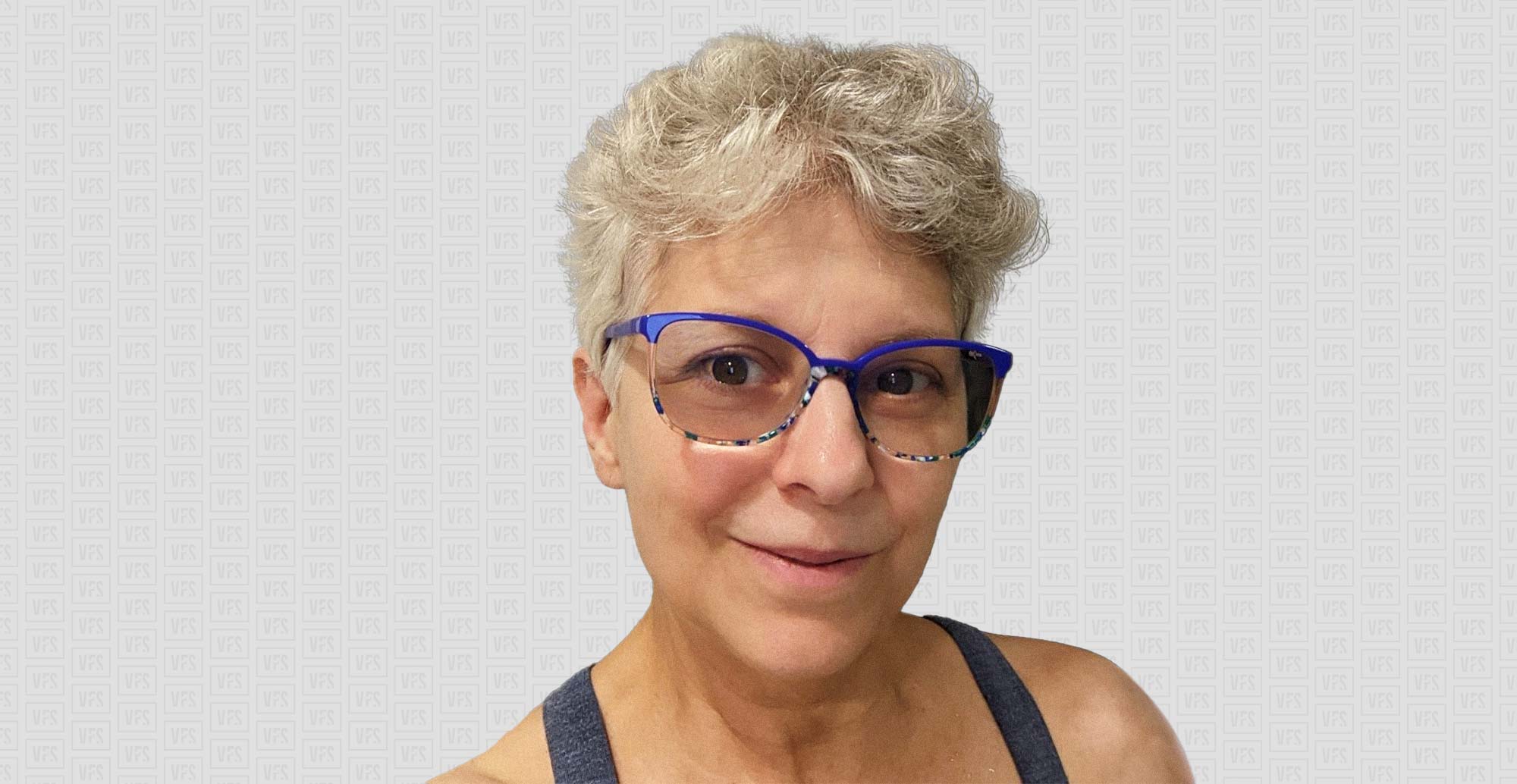
VFS Game Design Instructor Zoe Curnoe loves games, which is a good thing, since she’s also Development Director 2 at Electronic Arts, one of the biggest game companies in the world. And that love of games extends to making them better, and to making the industry better too – particularly when it comes to encouraging women to participate as creators, producers and players. To this end, she is also co-chair of Women in Games Vancouver, an organization committed to “Champion professional development, career growth opportunities, networking, mentoring and education opportunities within the games community in Canada.” We recently spoke with Zoe about her passion for games, her ideas about getting more girls and women interested in both playing them and working in the game industry, and her opinion about a few recent controversies.

VFS: Ok, first of all, as someone who works in the game industry and who is an instructor at VFS Game Design, could you just tell us briefly how you got into games, and whether you faced any obstacles that were based on your being a woman?

Zoe: My educational background is in visual arts and photography but I’ve always been a gamer. I blame my brothers for that. In 2000 I moved to Vancouver and quickly realized that the world was changing: the “.com” boom was in full swing and to make myself more relevant I knew I needed some digital media skills. So, I did a post graduate certificate at UBC in Multimedia Production and I just loved it. I was pretty much the only person in my class who thrived in the Project Management course, and I realized I wanted to be managing the people making the content, rather than making the content myself. Then, right in the middle of my course, 9/11 happened and the entire “.com” industry imploded at the same time. When I came out of the program, absolutely no one was hiring, so I ended up working for the Centre for Digital Imaging and Sound and then luckily, got into a program at the Banff New Media Institute (BNMI) for training more Canadians in the creative industries. That’s really where my career as a Producer took off. Now, when I wanted to transition to the commercial video game industry, it was a challenge for sure. Mostly because I didn’t have direct games production or QA experience, and gaming can be a bit particular about that. But I never felt it was because I was a woman. I know everyone who interviewed me was super surprised I played video games, however, and still often are.

VFS: You’re part of Women in Games Vancouver, and you recently organized a pretty interesting panel, titled “Rescuing the Game Industry: Women and Children First?”, which, amongst other things, posed the question, “Is the reign of the 18-35 male gamer coming to an end?” Now that the event is over, how do think that question should be answered?

Zoe: That’s a great question! And I’m going to be a bit inflammatory by saying “Yes!” – I think console and PC developers have to expand their markets to survive what is currently happening, and I think they need to make more of an effort to capture this new market of women who are playing so many mobile and social games. They are ripe for the picking right now, and frankly, I would love to see some more traditional console dev’s make and market games to a different audience, and definitely introduce more female protagonists.

VFS: Can you tell us a little bit about the mission of Women In Games Vancouver, and what they have next on their agenda?

Zoe: Women in Games Vancouver’s main goal, on a very simple level, is to get more women working in the game industry. At the moment, we are focusing on holding regular events to bring women together to meet one another, providing opportunities for students or for women who work in other industries to network, and to help educate and have discussions about what’s going on in our industry. We’ve hosted panels, held talks at local high schools, and we’ve advised on government initiatives. Our next event is Nov 15th and our special guest is Matt Toner from the Can We Do It campaign (He is running for the NDP in False Creek). [He's also President of Zeroes 2 Heroes Media and a VFS graduate from the Screenwriting program, 2001-ed.] He wants to come and talk to women about their specific political concerns regarding the industry, and how he can address some of these issues with his political campaign. We aren’t endorsing him as a candidate, but rather, providing a venue where we can gather female game developers together to facilitate the conversation.

VFS: Obviously, you have a personal stake in this matter, and I’m curious about your take on it, particularly as an educator. Have you thought about how to keep girls interested in tech and games so they will pursue it as a career?

Zoe: I think about this all the time. I’m not kidding, it keeps me up at night. Especially when we do sessions with high school girls and I see how disinterested they seem. I think we need to start young, and then consistently provide them with the opportunity to learn more about what tech careers can offer them. I was just reading a really interesting study a female software engineer in Silicon Valley did on commonalities among her female colleagues, and two things bubbled to the top: Most of the women had one or both parents in a tech role; And, they were given Lego to play with as kids. I read this and I had an “aha” moment about the Lego. I think this says a lot about what parents can do to encourage a certain type of thinking in young girls, and to foster it throughout their lives. I think Lego encourages the creative side as well, and this is a great way to grow both those sides of your child’s brain. So, I think it starts very young, at home. Encouraging girls to play with non-traditional “girl” toys, and then fostering this type of interest as they get older. There are a few really neat programs popping up now, like, girls’ hackathons, girls-who-code organizations, make-a-game weekends for girls. So, we need more of this stuff, and we need to get it happening in the middle schools and high schools.

VFS: You probably have a good sense of what sort of games appeal to girls and women, do you think the market is failing to serve that interest?

Zoe: Well this is a hard question, because I have played games my whole life and I like a lot of games that are traditionally “male” games, which I don’t think would appeal to a lot of my non-gamer female friends. But I think the biggest barrier to entry for the non-gamer is that console games in general (regardless of subject matter or style) are intimidating and seem overly complicated. Just the console controller itself is a scary prospect for the non-gamer. PC games or MMO’s also often appear overly complicated. Online gaming can be quite intimidating for women players – there have been cases of some pretty serious online harassment of female players. Many women gamers I know hide their female identity online or have stopped online gaming altogether because of this. I do think the online problem is actually changing now, and companies like Riot Games, who make League of Legends are aggressively monitoring their community to remove this type of behaviour.

What I want to see, though (talking about console and PC games), is more female protagonists, more games that show strong, tough women in lead roles that women can relate to. When I play Mass Effect I always play as the female Shepard; she’s badass and I love playing as her. I used to feel the same way playing Lara Croft on the PS1. I also think games need to be marketed better to women – how awesome would it be for Microsoft and Sony to actually market their consoles to a female audience? And I don’t mean making a pink console, (although I do own a pink PS2 that I love).

Zoe Curnoe by Rory McGuire

VFS: You mentioned the game Journey and your experience with your 5-year-old niece. Can you tell me a bit about that?

Zoe: This relates to what I’ve already mentioned. Recently, I was telling my brother and his wife about Journey (which I think is, hands down, one of the best games made in the last ten years). They let their daughter, my niece, play around with it. She just picked up the controller, tried moving the character around, etc. She was completely enthralled by the cloaked character, as well as the environment the character was in. Then, the next time I visited, she turned to me and asked me if the cloaked character was a boy or a girl, and I just said, well Tesla, (yes she is named after Nikolai Tesla) what do you think the character is? And she very definitively said: “I want it to be a girl!” So I said, “well then, it is a girl,” and she beamed the biggest smile I think I have ever seen. She was so excited by this thought, and it made her love the game that much more. And funnily enough, immediately after she said this, my 7-year-old nephew chimed in that he thought the character was a boy.

Zoe: There is something that happens to us when we are told a game was made for us (male or female) and it draws us more naturally into it. Again, I’m not suggesting the use of stereotypical cutesy/girlie images or a merely using a lot of pink to draw girls and women in – I mean using the kind of smart, interesting, engaging content that draws us in.

VFS: What sort of games are girls and women interested in? I’ve recently read, courtesy of material related to the Women In Games initiative, that women in their 30′s are very big on games, and in particular, social games – does this gel with your sense of things?

Zoe: At the moment, yes, this is very true, and this is currently the fastest growing market. But I think this relates back to these games being very accessible for the non-gamer. They are “pick up and play” games, which don’t require a big time commitment and have basically no barrier to entry. Before the “social and mobile games revolution” of recent years, one of the most played games by women was Solitaire on the PC. But again, I truly believe this comes down to accessibility. I think about my 70-year-old mother, who loves to watch us play games, who in fact, spent a good amount of time watching me kill zombies in Resident Evil 2 on the PS1 while hiding behind a blanket on our couch. I think a lot of women have traditionally held a role similar to this, where they will be the observer rather than the participant, because of being intimidated and thinking “Oh, I won’t be very good at that” – but they are still very intrigued by what’s out there.

VFS: What do you think could be done to help make the game industry a more welcoming place for women to work?

Zoe: Well, it’s a bit of a “Catch 22″, since more women working in the industry make it a more welcoming place for women to work. But in general, I think the game industry is a welcoming place for women to work – the problem is women don’t know it’s a viable career choice. Or, they’re transitioning – for example, as a Project or Production Manager in another industry – and it’s hard for them to get hired. They might feel that they aren’t getting hired because they are women, but I don’t believe that’s the case. It does come down to skill and experience, and we need to help those women transitioning out of other industries to get the training that will help with their skills and knowlege transfer to the game industry. Also, it’s often the case in the game industry that hiring happens when there is a fire burning, so we look for people who already understand game development and can immediately ramp up to the immediate needs. Sadly, there isn’t a lot of time to do much on-the-job training. That situation supports the argument for more “transition” training for women from other creative or tech industries.

I’ve talked to a lot of guys over the years who are shocked if it’s implied women have had bad experiences working in games. It bothers them a lot that this might exist. Every single guy I have spoken to over the years wants more women on their teams.

VFS: You mentioned during a previous disccusion a test you did with Anita Fontaine for high school girls using a game developed for the Rural Advanced Community of Learners (RACOL) – can you tell us about that?

Zoe: I worked with Anita on an educational initiative at BNMI in 2004, she was the designer and artist on 1 out of 3 games that we developed with a focus on teaching Math and Physics to Grade 12 students. When we brought in high school students to do some user testing, we had each designer present their game to the students first, then we brought the students into a classroom to play the games (2 were made by guys, 1 by Anita). All the girls said they only wanted to play the game Anita had made. They said to me: “I want to play the game that girl said she made for us” (interestingly, Anita did not say in her presentation that she had created it for them).

This speaks to what I mentioned earlier, in that, if someone feels included in the creation of something, then they are more apt to seek it out. So, if for instance, the new Lara Croft was marketed as “Play as her”,  then a lot more women might be inclined to pick up this title and try it out.

I recently saw the documentary Wonder Women, and it really brought up some key questions for me related to the entertainment industry as a whole, like: Where are the Ripleysthe Xenas or Buffys for this generation? Where have all the female heroes gone? I think about what strong female characters are in popular media to show to my niece as she gets older, and I don’t really see anything out there. So, even in the general entertainment industry (Film and TV) we have hit an odd period, where these strong cool female characters have all but disappeared. I think that once we have more women working in content creation roles in all media, then we might start to see a change.

VFS: You also previously mentioned a recent debate about “casual sexism” in games (courtesy of the Borderlands 2 Skill Tree and the notion of “girlfriend mode“, the Lara Croft “attempted rape scene” and the not-so-casual sexist aggression represented by the online attacks on Anita Sarkeesian (in particular, ironically, the game “Beat up Anita Sarkeesian“). What do you think about the issue?

Zoe: There is not enough time in the day to sum this up here! But what I will say is that, in response to those issues, I was excited to see the online reaction from the female gaming community. They are very present and very vocal, and for the first time, I’m seeing this really active online voice out in the mainstream reacting to this stuff right when it happens. In the past, it might have gone unnoticed or been swept under the carpet, but that isn’t happening anymore. I think that this kind of response is gaining momentum, and I’m encouraged by that. However, these issues also indicate that sexism is far from dead in the game industry.

I will say that the Borderlands 2 skill tree is a fantastic game idea. We talked about this a lot at the panel in the context of accessibility. Ironically, referring to it as “Girlfriend mode” is probably what alienated the people the mode could have been otherwise successfully marketed to.

VFS: Well, that was a lot of ground to cover, but where do you think it’s all heading next?

Zoe: I think the entire game industry is on a precipice, just peaking over the edge, and it’s really scary and really hard to tell what’s going to happen next. Trends are spiking and falling quicker than at any other time in the history of games, and it’s a bit of a crazy place to be. But that’s also what makes it so exciting to work in this industry, and why I would say come join us, it’s a pretty damn cool place to be.

VFS: Thank you very much Zoe for talking with us! We will certainly keep an eye out for future activities sponsored by Women In Games!

Zoe: Thanks for asking me! 

Facebook Comments

Leave a Reply

Your email address will not be published. Required fields are marked *

*

You may use these HTML tags and attributes: <a href="" title=""> <abbr title=""> <acronym title=""> <b> <blockquote cite=""> <cite> <code> <del datetime=""> <em> <i> <q cite=""> <strike> <strong>